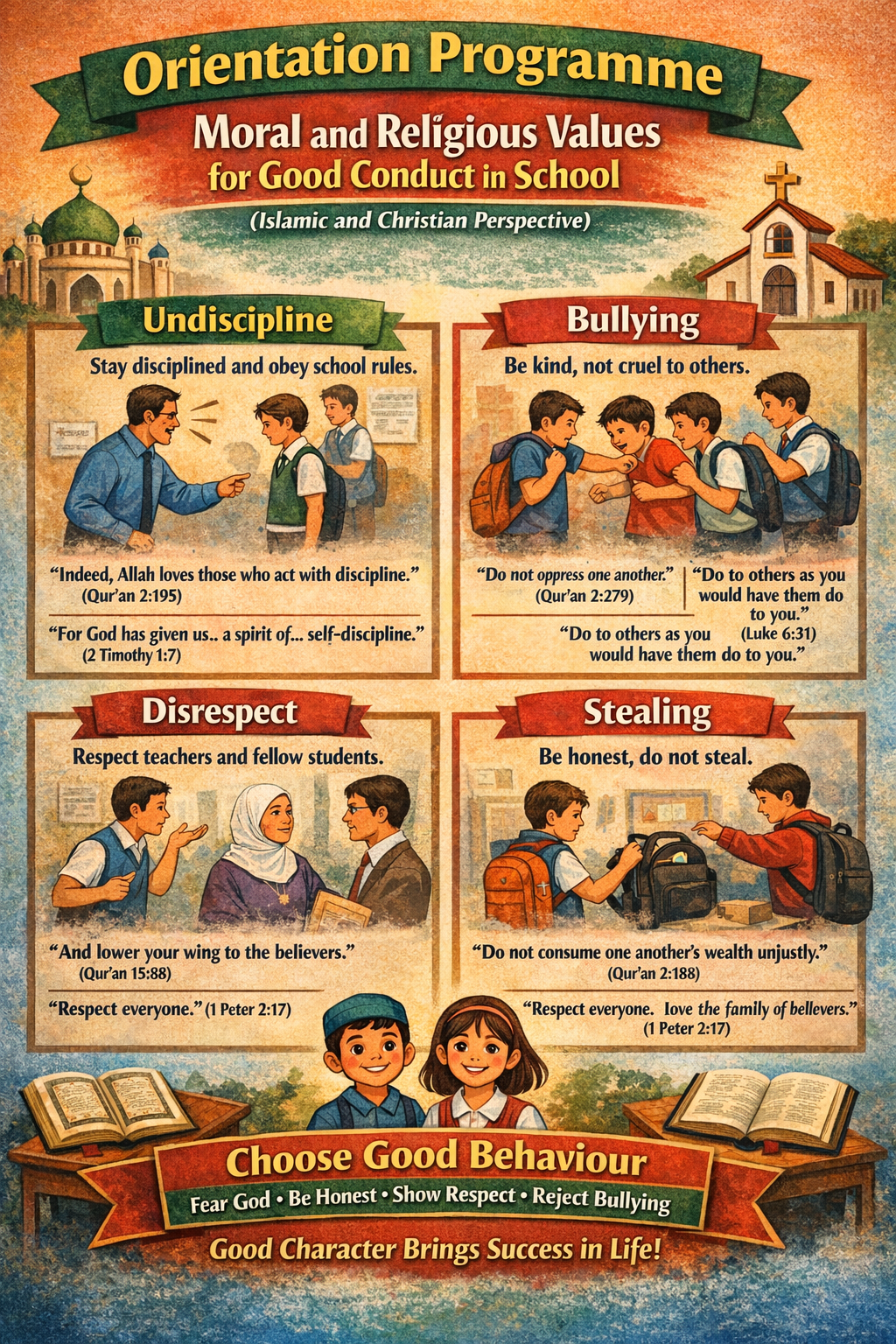
Education shapes not only the mind but also the character. Both Islam and Christianity teach that good behaviour is the foundation of a meaningful life. Discipline, honesty, respect, and kindness are values that guide students toward success in school and society. Undiscipline:Undiscipline includes lateness, truancy, disobedience to school rules, fighting, examination malpractice, and noise-making. Undiscipline weakens self-control and leads to punishment, poor academic performance, and damaged reputation.Islam teaches self-discipline and obedience, as Allah loves order and righteousness. Christianity also teaches self-control as a virtue that leads to wisdom and success.References:“Indeed, Allah loves those who act with discipline and righteousness.” (Qur’an 2:195)“For God has not given us a spirit of fear, but of power, love, and self-discipline.” (2 Timothy 1:7) BullyingBullying involves physical harm, insults, threats, intimidation, and online harassment. It causes emotional pain, fear, and loss of confidence. Bullying is a form of oppression and cruelty, which both Islam and Christianity strongly condemn. Students are encouraged to show kindness, stand up for others, and report bullying to teachers.References:“Do not oppress one another.” (Qur’an 2:279)“Do to others as you would have them do to you.” (Luke 6:31) Disrespecting Peers and TeachersDisrespect includes rude language, disobedience, insults, fighting, and refusal to follow instructions. Teachers are mentors and guides, and peers are companions in learning. Respect creates peace, cooperation, and a positive learning environment. Disrespect leads to conflict, punishment, and loss of trust.References:“And lower your wing to the believers.” (Qur’an 15:88)“Respect everyone, love the family of believers.” (1 Peter 2:17) StealingStealing is taking what does not belong to you, whether money, books, uniforms, or personal items. It destroys trust, brings shame, and attracts serious consequences. Islam and Christianity both forbid stealing and encourage honesty, contentment, and hard work.References:“Do not consume one another’s wealth unjustly.” (Qur’an 2:188)“Whoever has been stealing must steal no longer, but must work.” (Ephesians 4:28) Moral and Religious LessonsGood character is more valuable than wealth or popularity. Students with discipline, honesty, kindness, and respect gain the pleasure of God, the respect of teachers, and the trust of their peers. Bad behaviour may appear attractive at first, but it leads to regret, shame, and failure.References:“The most honourable among you in the sight of God is the most righteous.” (Qur’an 49:13)“Good character is worth more than riches.” (Proverbs 22:1) ConclusionStudents are encouraged to fear God, obey school rules, respect teachers and peers, reject bullying, avoid stealing, and practise self-discipline. Good behaviour reflects strong faith, proper upbringing, and responsible citizenship. By choosing what is right, students build a future filled with success, peace, and honour. Mr. Kushimo A.RCoordinator: Literary and Debate Programme